Healthy Ginger Recipes for Every Day
Fuel your day with nutritious meals made with Ginger. Tasty, balanced, and easy to cook.
Recipes with Ginger

Shogayaki is a beloved Japanese dish featuring thin slices of pork sautéed in a fragrant ginger-infused sauce. The pork is typically marinated briefly in a mixture of soy sauce, mirin, sake, and freshly grated ginger, then quickly stir-fried until tender. This savory-sweet combination delivers a comforting flavor profile that's both robust and refreshing. Often served with steamed rice and shredded cabbage, Shōgayaki is a staple in Japanese home cooking, appreciated for its simplicity and satisfying taste.
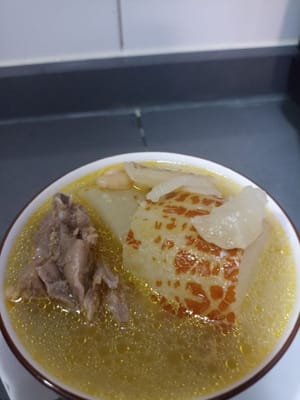
Duck Soup with Old Cucumber and White Kara Seed invites you to savor the intimacy in every mouthful—a vibrant poultry broth, smooth and aromatic, intertwined with the freshness of aged cucumber, and the mysterious touch of white kara seed and fragrant dried orange peel. The dish is like poetry, where the rich duck meat is immersed in a clear, warm liquid, while ginger infuses a soothing warmth, and salt softens the overall flavor. Each bowl flows with the harmony of the yin-yang of flavors: warm and cool, concise yet rich, offering a balance of flavors that soothes the soul.

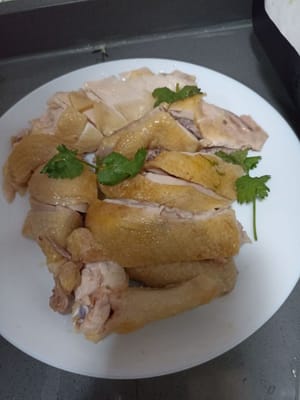
The amount of ginger paste in this recipe is three times the usual amount, because my whole family loves ginger paste. Generally, ginger paste is served with boiled chicken, but everyone in my family mainly eats ginger paste with rice, and the amount of rice is two to three times larger than usual 😳
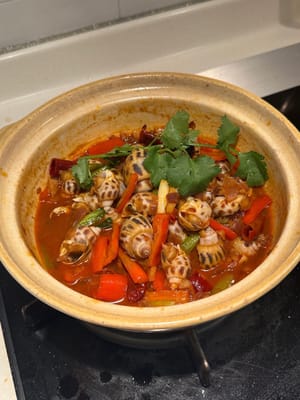
Sea snails are cleaned and quickly blanched, then cooked in a fragrant, spicy clay-pot sauce built from ginger, garlic, onion, dried chillies, spicy bean paste and Chu Hou paste. Soy sauce and oyster sauce bring a deep savoury backbone, while white pepper adds a gentle kick. The finish is all about aroma: Huatiao wine, rice wine, and a final splash of rose wine create a bold, warming, restaurant-style seafood dish with a rich, glossy sauce—topped with fresh red chilli and green onion for a bright lift.
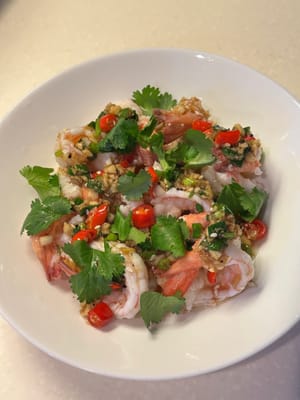
Spicy Numbing Prawn turns flattened, corn-starch–coated prawns into delicate, bouncy “prawn chips,” briefly cooked then chilled for extra snap. They’re finished with a punchy jiao-ma style dressing—garlic, ginger, spring onions, red chillies, and ground Sichuan pepper bloomed with hot oil, then rounded out with soy sauce, oyster sauce, Sichuan pepper oil, and a touch of sugar—topped with sesame and coriander.
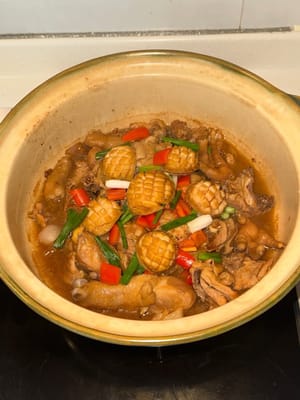
A rich, aromatic clay-pot dish that pairs juicy chicken pieces with tender abalone, driven by the deep savoury punch of chu hou paste, soy bean paste, oyster sauce, and soy sauce. Garlic, ginger, and shallots bring that classic “sizzling” fragrance, finished with a generous splash of hua tiao wine for a restaurant-style, glossy, umami-packed finish.
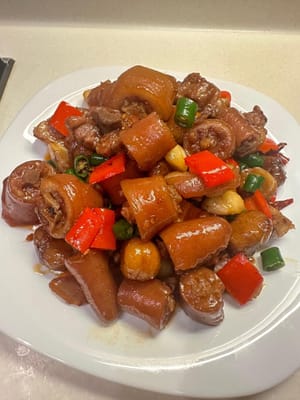
Braised Pork Tail with Chestnuts is a bold, warming dish where pork tail and chestnuts soak up a savory blend of soy sauce, dry pot sauce, oyster oil, and beer. Ginger, garlic, green onion, and a mix of green, red, and dried chillies add fragrance and heat, finished simply with salt and white pepper for a rich, deeply satisfying bite.
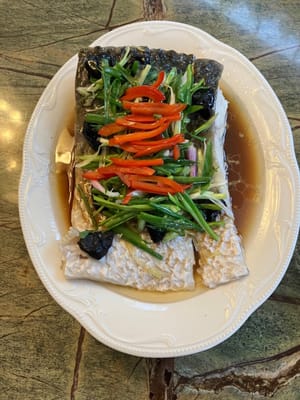
A classic Chinese-style steamed fish belly dish that lets the grass carp stay tender and clean-tasting, while preserved Chinese olives add a distinctive savoury, slightly briny aroma. Finished with soy sauce and a sizzling pour of hot peanut oil over ginger, spring onion, and red capsicum, it’s simple but deeply fragrant—and cooks fast with a high-heat steam. This dish, in fact, is better to use mud carp which is very bony and not suitable for old and young. So I replace it with grass carp belly.

Enjoy the pleasures and benefits of eating Korean kimchi, especially homemade kimchi. With no unnecessary additives, the naturally fermented probiotics protect gut health, while lactic acid bacteria regulate the gut and dietary fiber aids digestion. It boasts a rich and layered flavor: a harmonious blend of sour, spicy, and savory. The lactic acid produced during fermentation brings a refreshing tang, while the spiciness of the chili is not overpowering. Paired with garlic, ginger, apple, and pear, it's crisp, tender, and juicy. It can be served as a side dish to cut through richness or to add a touch of soul to rice, noodles, and other staple foods. Every bite is appetizing and satisfying. When chewing, you can feel the collision of the natural sweetness of the ingredients with the fermented flavor. It tastes even more refreshing when chilled, making it a delightful and comforting addition to everyday meals. It's versatile: it can be eaten raw as a side dish, stir-fried with pork belly, used in army stew, or added to kimchi soup. Heating it softens the sourness and enhances the aroma, making it a delightful addition to both casual meals and lavish banquets.